EU Tariff Classification: Now Available at Trade Insight AI
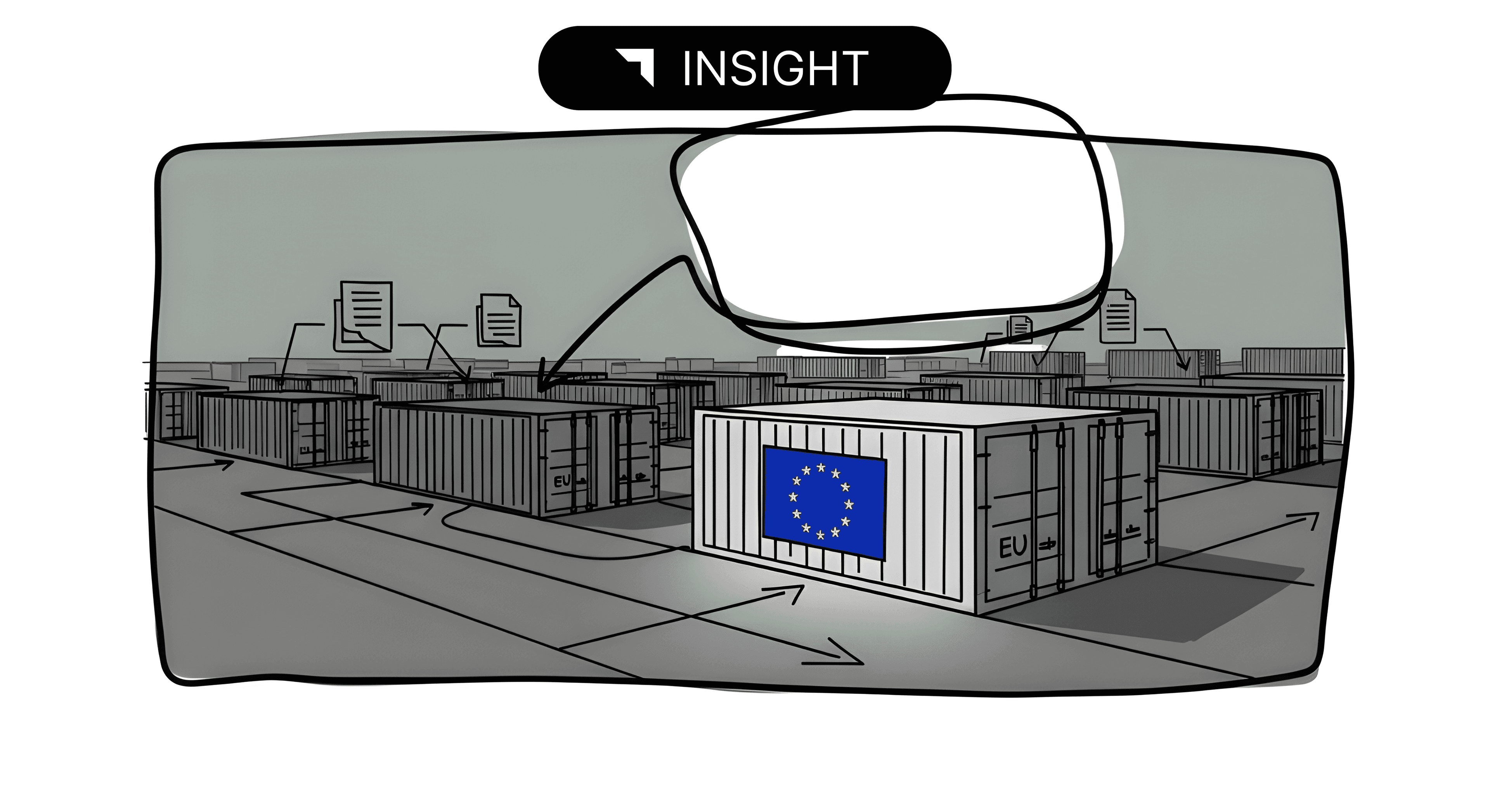
Trade Insight AI now supports tariff classification for the European Union.
This is not a simple extension of US HTS coverage. EU tariff classification operates under a distinct legal, administrative, and enforcement framework, and it requires a different level of structure, reasoning, and defensibility from day one.
This article explains why EU classification is fundamentally different, what changes for companies operating across both jurisdictions, and why Trade Insight AI approaches EU classification as a logic-driven compliance system rather than a code-mapping exercise.
The EU Is Not an Extension of US HTS
Although both systems are based on the Harmonized System, EU tariff classification functions within a decentralized regulatory environment.
In the United States, classification is administered by a single customs authority, with centralized enforcement, rulings, and litigation. In the European Union, the same legal nomenclature is applied across 27 Member States, each with its own customs authority, audit practices, and enforcement priorities.
This means a classification decision must be defensible not once, but repeatedly, across jurisdictions. A position that passes quietly in one Member State may be challenged in another. Consistency and legal logic are not optional.
Binding Tariff Information Changes the Risk Model
Binding Tariff Information decisions are a central pillar of EU classification practice.
BTIs are legally binding across the entire Union for the holder and are routinely referenced by customs authorities during audits and post-clearance reviews. At the same time, they are time-limited, fact-specific, and subject to revocation.
As a result, BTIs increase the importance of structured legal reasoning. Companies must be able to explain not only which BTIs they rely on, but why those decisions apply to their products based on objective characteristics and legal text.
EU classification programs that rely solely on historical precedent or broker confirmation tend to break down under scrutiny.

$100 in free credit! Zero risk.
Create your free account — no credit card required.
Legal Notes Drive Classification Outcomes
EU customs authorities place significant weight on Section Notes, Chapter Notes, and Explanatory Notes to the Harmonized System and Combined Nomenclature.
Classification analysis often starts with exclusions, definitions, and scope limitations rather than commercial descriptions or prior usage. Headings that appear commercially intuitive may be legally unavailable once notes are applied.
This makes informal or outcome-driven classification especially risky in the EU environment, particularly for composite goods, sets, and technology products.
Essential Character Is Applied More Narrowly
While concepts such as essential character exist in both regimes, they are applied differently.
In the EU, essential character analysis is typically used only after other interpretive tools have been exhausted and is often constrained by specific legal notes. Classification approaches that rely heavily on GRI 3(b) logic in the US do not always translate cleanly to EU entries.
This is one of the most common sources of divergence and reassessment for companies expanding into Europe.
Why a Logic-Driven System Matters From Day One
EU tariff classification is evaluated based on legal defensibility, not just apparent reasonableness.
Audits frequently focus on whether an importer can reconstruct the reasoning behind a classification decision using the text of the nomenclature, applicable notes, and established interpretive principles. Internal spreadsheets, copied codes, or undocumented assumptions rarely hold up.
For this reason, Trade Insight AI treats EU classification as a rules-based, logic-first process. The goal is not only to produce a code, but to preserve the reasoning that supports it across Member States, audits, and regulatory change.
A Foundation for EU-Focused Classification Content
The availability of EU tariff classification in Trade Insight AI marks the beginning of a broader EU-focused compliance track.
Upcoming content will cover topics such as Combined Nomenclature interpretation, BTI research and lifecycle management, cross-Member State consistency, and early indicators of classification drift in the EU context.
This initial announcement sets the baseline. EU tariff classification is now supported in the platform, and it is approached as what it truly is: a distinct legal environment that demands structured, defensible decision-making from the start.
Learn more about EU tariff classification in our app!