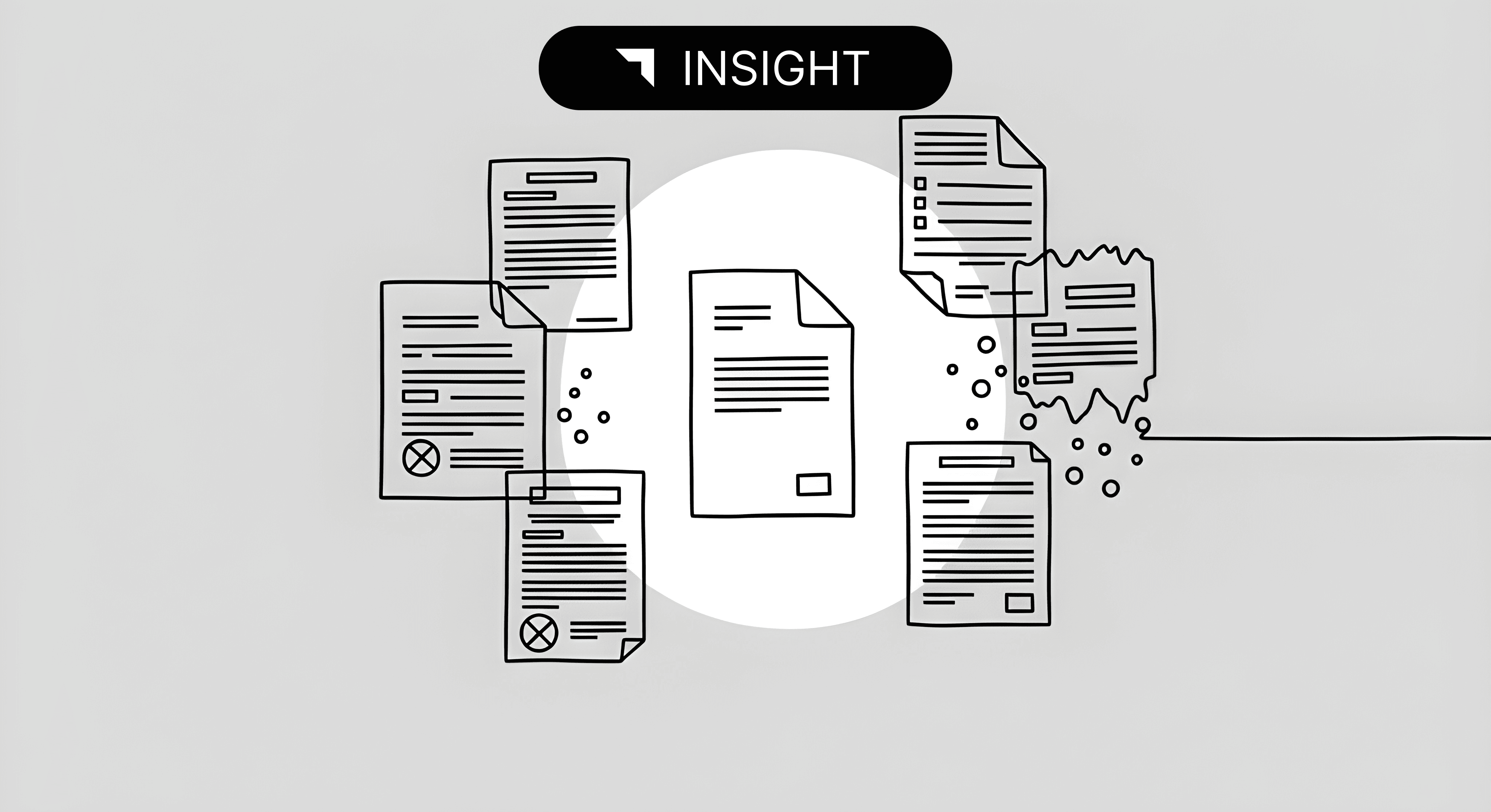
Evidence Decay: When Good Classifications Go Bad
A classification can be correct at the time it is made and still become risky later.
Most classification programs focus on establishing defensible decisions based on the best available evidence. Once documented, those decisions are often treated as stable reference points. In practice, the evidence supporting a classification is not static. Products evolve, suppliers change processes, and documentation standards shift. When those inputs change, previously sound decisions may no longer rest on current information.
Quality management standards such as ISO 9001, an international framework for managing and controlling business processes, emphasize that controlled systems require ongoing monitoring and periodic review. Classification decisions are no exception. When the underlying evidence is not maintained, organizations face a gradual form of risk that can be described as evidence decay.
Evidence decay does not appear as a single failure. It develops over time as the link between historical documentation and present product reality weakens.
How Evidence Becomes Outdated
In operational environments, product information changes for routine business reasons. These changes are not unusual or inherently problematic. Risk arises when they are not reflected in classification records.
Common drivers include:
- Supplier updates to materials or manufacturing methods
- Incremental product design changes
- Revisions to technical specifications
- Variations in documentation practices across vendors
Each change may be operationally justified. However, if classification evidence is not revisited after these adjustments, the supporting record may no longer accurately describe the product.
Change management disciplines consistently stress that controlled processes must account for downstream impacts. In classification programs, this includes assessing whether product or supplier changes affect prior decisions.
The Risk of Treating Classifications as Permanent
Reusing established classifications is necessary for efficiency. Large product catalogs cannot be reclassified from scratch each time. The risk appears when legacy decisions are reused without structured validation.

$100 in free credit! Zero risk.
Create your free account — no credit card required.
From a governance perspective, this creates a disconnect between decision records and current operating conditions. Audit and compliance frameworks generally expect organizations to maintain traceable and current documentation supporting regulated decisions. When evidence ages without review, that expectation becomes harder to meet.
The challenge is not that past decisions were wrong. The challenge is that their supporting context may have changed.
Evidence Management in AI Assisted Classification Systems
AI assisted classification systems depend on structured evidence to scale decisions across large product catalogs. This creates a practical advantage. When evidence is organized and monitored systematically, organizations gain better visibility into how classification decisions are supported.
Modern AI governance practices emphasize ongoing supervision and review of automated decisions. Signals such as override activity or shifts in recommendation patterns can highlight where evidence may need reassessment. These signals provide an early and measurable way to focus review efforts where they are most useful.
AI systems make it easier to surface patterns that would be difficult to detect manually. When combined with structured governance, they support more disciplined evidence management. Organizations can review legacy decisions more efficiently, concentrate attention on higher risk areas, and maintain stronger alignment between documentation and current product reality.
In this sense, AI assisted classification strengthens an organization’s ability to manage evidence as an active and visible part of the decision process.
Managing Evidence as a Living Asset
Organizations that manage classification programs at scale increasingly treat evidence as a living asset rather than static documentation. Practical controls include:
- Periodic sampling of legacy classifications for evidence validation
- Review triggers linked to supplier or product changes
- Standardized documentation requirements
- Tracking when evidence was last confirmed
These practices align with established approaches to document control and continuous improvement found in quality management systems. They make gradual evidence drift visible and manageable.
Conclusion
Evidence decay is a predictable feature of dynamic product environments. Even well supported classifications can lose strength as products and documentation evolve.
Programs that periodically reassess their evidence base maintain stronger alignment between decisions and current reality. In AI assisted systems, this discipline supports reliable automation and defensible governance.
Recognizing that evidence has a lifecycle shifts classification from a one time event to an ongoing control activity. This perspective helps organizations sustain decisions that remain accurate, transparent, and audit ready over time.
Related News

December 5, 2025
Tariff Reset: Korea’s 15% Reciprocal Duty, UK Pharma Exemptions, Quartz Safeguard Risks
Read more →
December 11, 2025
CROSS for High Variability Products: Electronics, Machinery and Complex Assemblies
Read more →
November 7, 2025