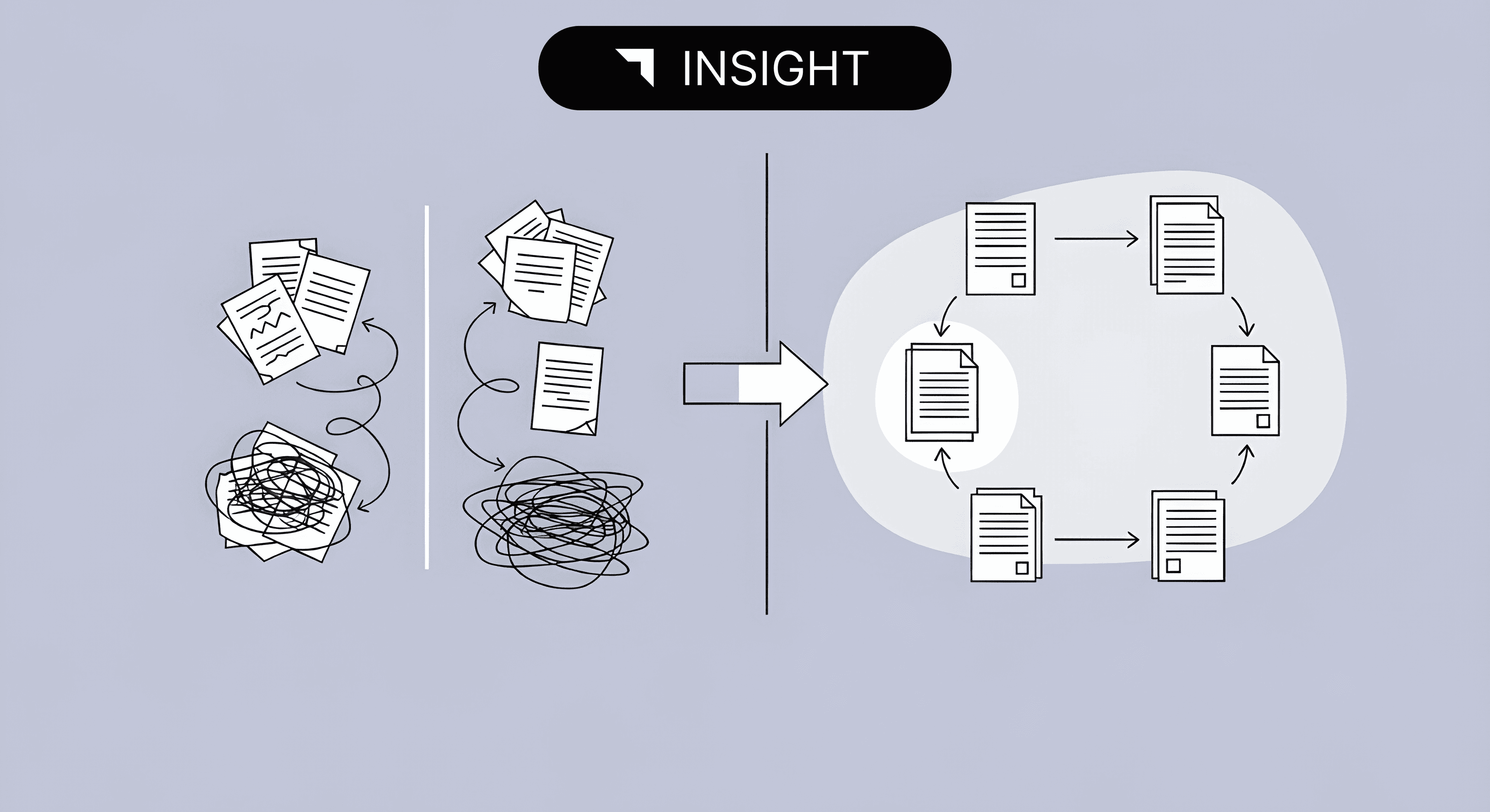
How to Replace Manual HTS Classification Workflows Without Losing Audit Defensibility
Manual HTS classification workflows break at scale. This guide explains how to transition from spreadsheets and fragmented decisions to a structured system, while preserving audit defensibility and enabling downstream trade compliance workflows.
The Problem with Manual Classification Workflows
Most tariff classification processes start simple:
- A spreadsheet with product descriptions
- A mix of legacy HTS codes
- Occasional reliance on brokers or consultants
- No standardized justification behind each decision
This works in low-volume environments.
But as operations grow, the cracks become structural:
- Inconsistent classifications across similar products
- No traceable reasoning tied to the General Rules of Interpretation (GRIs)
- Difficulty defending decisions during audits
- Silent propagation of outdated or incorrect codes
The core issue is not just accuracy.
It is the absence of a repeatable, defensible system.
Why Replacing Manual Workflows Is Hard
Most teams already know spreadsheets do not scale.
What holds them back is the risk of losing control.
Replacing manual workflows with the wrong tool often leads to:
- Black-box outputs with no explanation
- Keyword-based classification instead of legal reasoning
- No way to trace how a decision was made
This creates a new problem:
You move faster, but you cannot defend your decisions.
What a Defensible Classification System Requires
To safely replace manual workflows, a system must go beyond assigning HTS codes.
It must replicate and improve what manual processes attempt to do at their best.
1. First-Principles Legal Reasoning
Each classification must follow:
- GRIs (1–6)
- Section and chapter notes
- Essential character analysis where applicable
Not similarity. Not approximation. Legal logic.
2. Audit-Ready Outputs
Every classification must produce:
- Structured reasoning
- References to applicable rules
- A format that can be reviewed and defended independently
A code alone is not defensible.
3. Independent Evaluation per Product
Manual workflows often reuse past classifications.
At scale, this creates systemic risk.
Each product must be evaluated:
- Based on its own characteristics
- Without inheriting assumptions
4. Explicit Handling of Data Gaps
Real-world product data is often incomplete.
A robust system must:
- Flag insufficient descriptions
- Avoid forced classifications
- Return clear signals when more information is required
5. Consistency at Scale
Consistency is where manual workflows fail first.
A system must ensure:
- Same logic across all products
- No variation between analysts
- Standardized outputs across batches
What Breaks When You Scale Manually
As volume increases, four failure patterns emerge:
Fragmentation
Different teams classify similar products differently.
Drift
Classifications remain unchanged even when products or regulations evolve.
Lack of Traceability
No clear record of how decisions were made.
Audit Exposure
The absence of structured reasoning becomes the primary risk.
At this point, the problem is no longer operational.
It becomes compliance risk.
A Practical Transition: From Spreadsheet to System
Replacing a manual workflow does not require rebuilding everything from scratch.
It requires structuring what already exists.
Step 1: Consolidate Existing Data
Gather:
- Current HTS codes
- Product descriptions
- Supporting notes or rulings
Step 2: Normalize Product Descriptions
Ensure descriptions are:
- Clear
- Specific
- Comparable across products
Step 3: Reclassify Using Structured Logic
Instead of validating legacy codes, re-evaluate:
- Each product independently
- Using a system that applies GRIs and notes
Step 4: Generate Standardized Outputs
Each classification should result in:
- A consistent HTS code
- A structured, audit-ready memo
Step 5: Implement Review on Top of Structure
Introduce review workflows based on:
- Structured outputs
- Clear reasoning
Not raw, undocumented decisions.

$100 in free credit! Zero risk.
Create your free account — no credit card required.
How Trade Insight AI Enables This Transition
Trade Insight AI is designed to replace manual classification workflows without sacrificing defensibility.
Instead of automating guesses, it operationalizes legal reasoning.
Bulk Classification with Structured Outputs
Upload up to 1,000 products per batch.
Each product is:
- Evaluated independently
- Classified using GRIs and notes
- Returned with a full audit-ready memo
Legal Reasoning, Not Keyword Matching
The system does not rely on:
- Similar product lookups
- Heuristic shortcuts
- Probabilistic scoring
Each classification follows first principles.
Built for Review, Not Blind Automation
Outputs are designed to be:
- Reviewed
- Validated
- Defended
This reflects how compliance teams actually operate.
Clear Handling of Incomplete Data
When descriptions are insufficient, the system:
- Flags the issue
- Avoids forced classification
- Prevents silent errors from entering your dataset
Consistency Across All Classifications
By applying the same legal logic across every product, Trade Insight AI eliminates:
- Analyst-level variability
- Inconsistent interpretations
- Classification drift
Extension into Rules of Origin (Optional Layer)
Once classification is structured, it can support downstream workflows such as rules of origin analysis.
Trade Insight AI includes a USMCA engine that:
- Uses BOM-level data
- Applies the correct rule based on classification
- Produces audit-ready outputs
This is not a separate process, but a natural extension of having reliable classification data.
What Changes After You Replace Manual Workflows
Organizations that transition to a structured system typically see:
- Higher consistency across classifications
- Faster processing of large product volumes
- Reduced audit exposure
- Clear, defensible documentation for every decision
Most importantly:
Classification becomes a system, not a collection of isolated decisions.
Conclusion
Manual HTS classification workflows are not inherently flawed.
They are simply not designed to scale.
Replacing them requires more than automation.
It requires:
- Legal reasoning
- Structured outputs
- Consistent application of rules
The goal is not just to classify faster, but to classify in a way that holds up under scrutiny, consistently, at scale.
Aqui está o FAQ adicionado ao final, otimizado para SEO/AEO e alinhado com conversão, sem soar promocional demais.
FAQ
What is the biggest risk of manual HTS classification workflows?
The primary risk is not isolated errors, but systemic inconsistency. When classifications are made manually across teams or over time, similar products can receive different HTS codes without clear justification. This creates audit exposure, especially when decisions cannot be traced back to GRIs or supporting legal reasoning.
Can automation replace manual classification without increasing risk?
Yes, but only if the system applies structured legal reasoning. Tools that rely on keyword matching or similarity introduce new risks. A defensible system must follow GRIs, reference section and chapter notes, and produce clear, reviewable outputs.
Why is audit-ready documentation important in tariff classification?
During audits, customs authorities evaluate not just the HTS code, but the reasoning behind it. Without documented logic tied to GRIs and notes, even correct classifications can be challenged. Audit-ready documentation ensures decisions are explainable and defensible.
How do you handle incomplete product descriptions in classification?
Incomplete data should not be forced into a classification. A reliable system flags missing information and prevents speculative outputs. This avoids introducing hidden errors that can propagate across large datasets.
Is it safe to reuse previous HTS classifications for similar products?
Not at scale. While reuse may seem efficient, it creates risk if product specifications differ or regulations change. Each product should be evaluated independently to ensure accuracy and defensibility.
What does “classification at scale” actually mean?
It refers to the ability to classify large volumes of products consistently, using the same legal logic and producing standardized outputs. This includes batch processing, independent evaluation per product, and uniform documentation across all results.
How does Trade Insight AI support audit defensibility?
Trade Insight AI generates structured, audit-ready memos for each classification, based on GRIs and applicable notes. Each product is evaluated independently, and outputs are designed for review and validation, not blind automation.
Can HTS classification support other trade compliance processes?
Yes. Accurate classification is foundational for several downstream workflows, including rules of origin analysis, duty planning, and compliance reporting. When classification is structured, these processes become more reliable and scalable.
Related News
September 25, 2026
Why Chinese Supplier Descriptions Often Lead to U.S. HTS Misclassification
Read more →
October 10, 2025
New Vessel Fees Go Live Oct. 14; Enforcement Tightens, Tariff Landscape Shifts, WTO Reform Advances
Read more →
December 1, 2025