Cost of GRI 3(b) Errors: Penalties and Real Examples
Tariff classification errors remain one of the most common compliance issues identified by U.S. Customs and Border Protection (CBP). Among those errors, misapplication of General Rule of Interpretation (GRI) 3(b), particularly in cases involving retail sets and apparel, presents a recurring and often preventable risk for importers.
GRI 3(b) governs the classification of goods put up in sets for retail sale and directs classification according to the component that imparts the “essential character.” However, this rule does not operate in isolation. The legal notes to the Harmonized Tariff Schedule (HTS), including Section XI Note 14 and specific heading texts, can override or limit the use of GRI 3(b).
When GRI 3(b) is applied incorrectly, or applied when it should not be reached at all, the consequences can include reclassification, retroactive duty assessments, loss of preferential treatment, and expanded audit scrutiny.
Why GRI 3(b) Errors Occur So Frequently
Misapplication of GRI 3(b) typically results from one or more of the following:
- Treating commercially marketed “sets” as tariff sets without confirming HTS eligibility
- Applying essential-character analysis before reviewing heading text and legal notes
- Misunderstanding the scope and effect of Section XI Note 14 for textile garments
- Assuming that coordinated apparel automatically qualifies as a “set” or “ensemble”
- Failing to document the legal rationale supporting a GRI 3(b) decision
The following examples illustrate how these issues arise in practice—and why the cost of getting them wrong can extend well beyond a single entry.
Example 1: Pajama Top and Bottom Packaged Together — When GRI 3(b) Is Not Reached
Product: Women’s knit pajama top and matching knit pajama bottom, packaged together for retail sale.
At first glance, this product appears to be a classic retail set. However, classification analysis begins with GRI 1, not GRI 3(b).
Heading 6108 expressly provides for women’s or girls’ nightdresses and pajamas, knitted or crocheted. Because the heading text specifically names the goods, the classification is resolved at GRI 1 by the terms of the heading and the relevant notes.
Although Section XI Note 14 generally requires textile garments of different headings to be classified separately even when put up in sets, the Chapter 61 Explanatory Notes clarify that this rule does not apply where the heading text itself specifically names the set (with “pyjamas” given as an example).
Result:
The pajama top and bottom are classified together under heading 6108. Essential-character analysis under GRI 3(b) is not required and is not reached.
Compliance risk if misapplied:
If an importer incorrectly applies GRI 3(b) or splits the garments despite the named heading, CBP may identify inconsistent classification logic across similar products, increasing audit exposure and corrective filings.
Example 2: Athletic Top, Leggings, and Headband — Section XI Note 14 and the “Ensemble” Trap
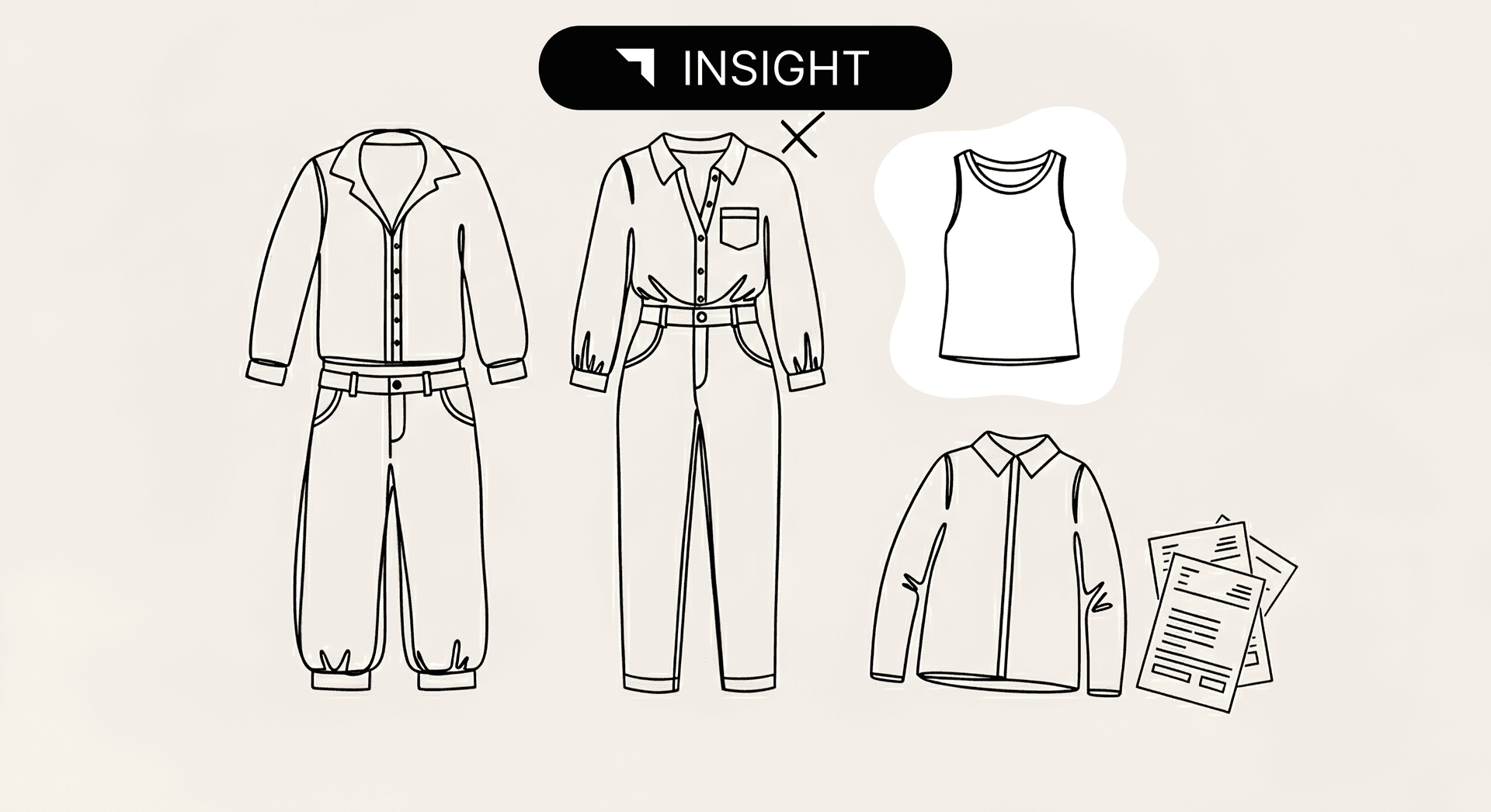
Product: Retail package containing a women’s knit athletic top, knit leggings, and a textile headband.
This scenario illustrates one of the most common and costly areas of confusion: coordinated apparel sold together.
The athletic top and leggings are both knitted garments of Chapter 61, while the headband is a clothing accessory. Although the items are packaged together and serve a coordinated use, Section XI Note 14 requires that textile garments of different headings be classified in their own headings even when put up for retail sale.
In limited circumstances, two garments may qualify as an “ensemble” under heading 6104, but only if strict conditions are met, including identical fabric construction, composition, style, color, and corresponding size. Articles of heading 6109 (such as T-shirts or singlets) are excluded from the ensemble definition. Accessories, such as headbands, are never part of the ensemble and must be classified separately.
Result:
Absent clear evidence that the top and leggings meet the legal definition of an ensemble, each garment must be classified separately under its own heading in Chapter 61, and the headband must be classified independently as an accessory.

$100 in free credit! Zero risk.
Create your free account — no credit card required.
Compliance risk if misapplied:
Treating coordinated apparel as a single set or assuming ensemble treatment without meeting the legal requirements can result in systemic misclassification across product lines. Once identified, CBP commonly expands review to similar entries and styles.
Example 3: Woven Blouse Packaged with a Plastic Belt — Proper Use of GRI 3(b)
Product: Women’s woven blouse packaged with a plastic belt.
This example demonstrates when GRI 3(b) is applied correctly.
The blouse is a woven textile garment of Chapter 62, classifiable under heading 6206. The accompanying belt is a non-textile accessory of plastics, classifiable separately in Chapter 39 if imported alone.
Because the set consists of different articles classifiable under different headings, and no Section or Chapter Note prohibits set treatment, GRI 3(b) applies. The essential character of the retail set is imparted by the blouse, which provides the principal use, value, and function. Section XI Note 14 does not override this analysis because the belt is not a textile garment.
Result:
The set is classified under heading 6206 by application of GRI 3(b), with the blouse imparting the essential character.
Why this matters:
This example highlights that GRI 3(b) remains a valid and necessary rule, but only when applied within the boundaries set by the HTS legal notes.
How GRI 3(b) Errors Propagate Across an Importer’s Catalog
One of the most overlooked risks in GRI 3(b) misclassification is scale. Classification decisions for retail sets are rarely isolated to a single product. Instead, they often become templates that are reused across an importer’s catalog, seasons, and suppliers.
When a product is initially classified, particularly a coordinated apparel package or retail bundle, that classification logic is commonly copied to:
- similar styles or colorways
- future production runs
- seasonal updates
- private-label variants
- broker instructions and internal SKU libraries
If the original decision incorrectly applied GRI 3(b), the error is quietly replicated across dozens or hundreds of entries.
From a compliance perspective, this matters because CBP typically evaluates classification issues pattern-by-pattern, not entry-by-entry. Once CBP identifies a misapplied rule—such as improper set treatment or failure to apply Section XI Note 14—it often reviews other products classified using the same rationale.
This is how a single incorrect GRI 3(b) decision can result in:
- retroactive duty assessments covering multiple styles
- expanded audit scope beyond the originally reviewed entries
- questions about whether the importer exercised reasonable care
- increased scrutiny of classification controls and documentation
Importers are particularly vulnerable when classification logic is embedded in internal systems or shared informally with brokers without accompanying legal justification. In those cases, the classification result may persist long after the original product has changed, even when underlying facts no longer support the original decision.
For this reason, disciplined documentation of why GRI 3(b) was, or was not, applied is as important as the final HTS code itself. Clear records help limit the impact of errors when they occur and demonstrate that classification decisions were made through a structured, good-faith analysis rather than by assumption or repetition.
Compliance Consequences of Getting GRI 3(b) Wrong
When GRI 3(b) is misapplied, CBP may:
- reclassify merchandise and issue retroactive duty bills
- deny preferential tariff treatment where origin analysis changes at the component level
- expand audits to cover additional products using similar logic
- evaluate whether the importer exercised reasonable care under 19 U.S.C. §1484
While not every classification error results in penalties, repeated or systemic errors increase exposure under 19 U.S.C. §1592, particularly where internal controls or documentation are lacking.
Why Documentation Matters
CBP does not require perfect classification outcomes, but it does expect importers to exercise reasonable care. For GRI 3(b) decisions, this means documenting:
- why the goods qualify (or do not qualify) as a retail set
- whether any Section or Chapter Notes override set treatment
- how essential character was determined, if applicable
- why alternative headings were rejected
Unsupported assumptions—such as “sold as a set” or “marketed together”—are not sufficient under the HTS.
Key Takeaway for Importers
The cost of getting GRI 3(b) wrong is rarely limited to a single entry. Errors often repeat across product lines and time periods, magnifying financial and compliance exposure.
The examples above demonstrate a critical point:
- sometimes GRI 3(b) is not reached at all
- sometimes GRI 3(b) is overridden by legal notes
- sometimes GRI 3(b) applies and works exactly as intended
Understanding when each outcome applies is a foundational requirement for compliant tariff classification.