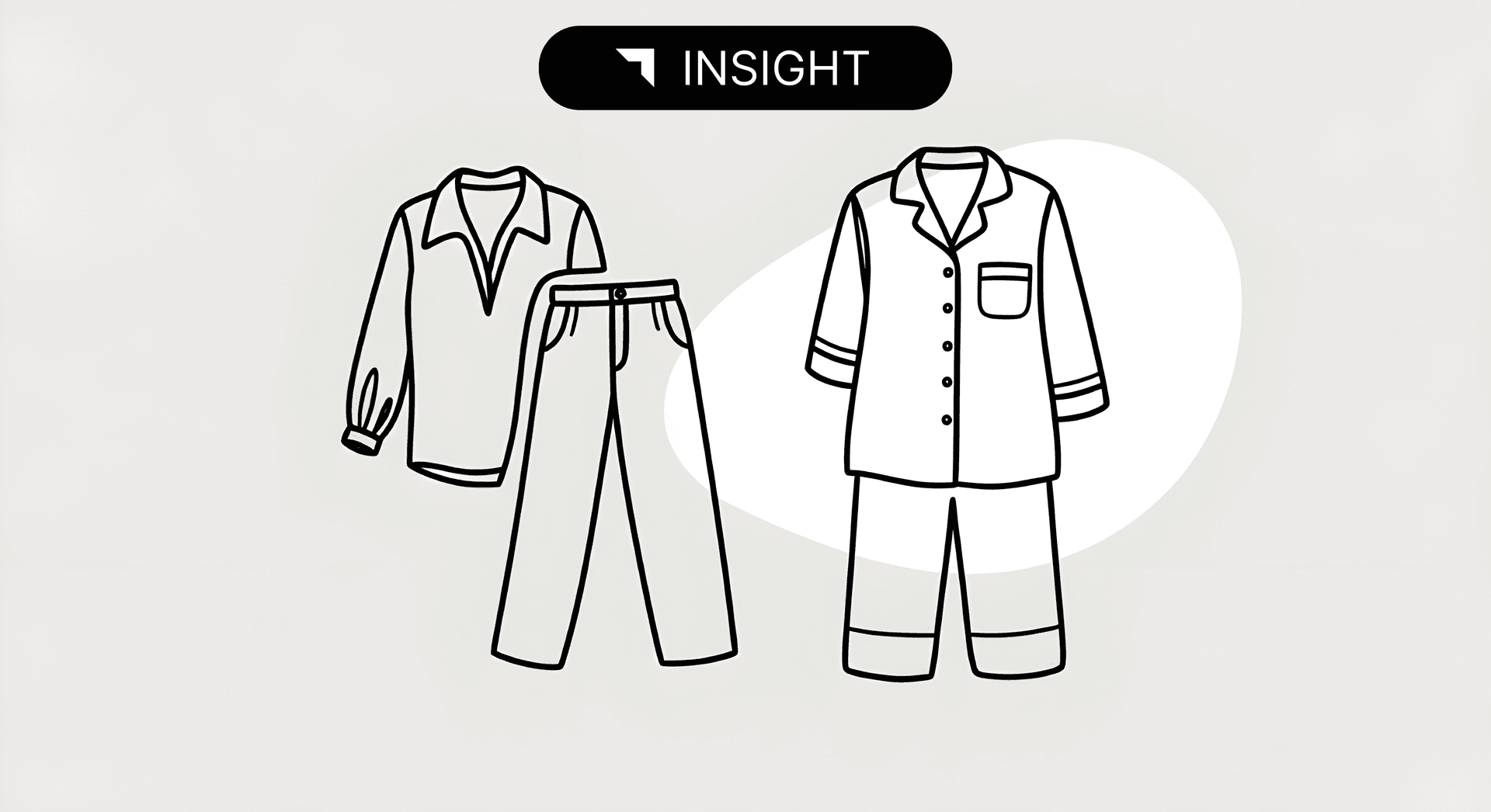
The Garment Exception: Why Section XI Note 14 Overrides Set Classification
Understanding How GRI 3(b) Interacts With the HS Notes, and How TIA Accurately Navigates the Rule
In tariff classification, GRI 3(b) is one of the most effective and widely applied interpretive tools. It governs “goods put up in sets for retail sale” and allows classification according to the essential character of the set. When applicable, it leads to clear, commercially intuitive results and reduces tariff line fragmentation for multi-component products.
But within the textile chapters, not all sets are treated equally.
The Harmonized System includes a special legal instruction, Section XI Note 14, commonly called the Garment Exception. This rule prevents certain apparel items from being classified as sets, even if they appear to meet all the requirements of GRI 3(b).
Using three examples processed through TIA’s classification engine, this article explains:
- how GRI 3(b) normally works,
- when Note 14 overrides set classification,
- when heading text creates a statutory exception, and
- how TIA’s structured methodology ensures accuracy.
1. GRI 3(b): The Standard Rule for Retail Sets
Under GRI 3(b), goods put up in sets for retail sale are classified as if they consisted of the component that imparts their essential character.
A retail set must:
- contain at least two different articles classifiable in different headings,
- be packaged together for a specific activity or need, and
- be presented for retail sale without repacking.
Outside the apparel chapters, this rule applies routinely and produces predictable outcomes.
But textiles introduce a legal constraint: Section XI Note 14.
2. Section XI Note 14: The Garment Exception
Section XI Note 14 states that garments of different headings must be classified separately, even if put up in sets for retail sale, unless the heading text itself specifically provides for the set.
This Note:
- prevents a set classification when garments fall in different headings,
- preserves heading-level distinctions (e.g., blouses vs. trousers), and
- reflects the HS design to maintain granularity for different garment types.
If Note 14 applies, essential-character set analysis under GRI 3(b) cannot be used.
3. Example 1: Blouse and Pants Sold as a Retail Outfit
Outcome: Separate classification required unless the goods qualify as an ensemble
Input:
A women’s woven cotton blouse and women’s woven cotton trousers sold together as a “Two-Piece Outfit Set.”
TIA’s Findings
- The blouse falls in heading 6206; the trousers in heading 6204.
- Because these are garments of different headings, Section XI Note 14 applies.
- Therefore, they must be classified separately, notwithstanding retail packaging.
- GRI 3(b) cannot be applied to treat the outfit as a set.
Exception Considered: Ensembles (Chapter 62 Note 3(b))
TIA correctly noted the only potential exception:
An ensemble may be classified as a unit if:
- the garments are of identical fabric, color, composition, and style,
- sizes correspond, and
- the set includes one upper and one or two lower garments.
Because this was a hypothetical example without evidence of identical fabric and styling, TIA correctly applied Note 14’s default rule:
separate classifications under 6206 and 6204.

$100 in free credit! Zero risk.
Create your free account — no credit card required.
Why this example matters
It demonstrates the core principle:
Even when goods appear to be a GRI 3(b) retail set, Note 14 can override set treatment entirely.
4. Example 2: Women’s Knit Cotton Pajama Set
Outcome: Classified together as pajamas, a statutory exception to Note 14
Input:
A women’s knit 100% cotton pajama top and matching knit pajama pants sold as a “Women’s Pajama Set.”
TIA’s Findings
- Both components are knit garments intended and marketed for sleeping.
- Heading 6108 specifically provides for “nightdresses and pyjamas” (knitted or crocheted).
- The Explanatory Notes to Chapter 61 clarify that sets specifically named in a heading (e.g., pajamas) are classified together, despite Note 14.
Thus, the pajama set is correctly classified as:
6108.31.00.10 - Women’s knit cotton pajamas
Why this example matters
It illustrates the second major rule:
When the heading text explicitly names the set (e.g., pajamas, ski suits, swimwear, suits), Note 14 does not apply.
This shows that the garment exception is not absolute, it yields to heading-specific provisions.
5. Example 3: Knit Scarf, Gloves, and Hat - A Cold-Weather Accessory Kit
Outcome: Classified as a set under GRI 3(b); Note 14 does not apply
Input:
A retail package containing a knit acrylic scarf, knit gloves, and knit hat.
TIA’s Findings
- These are accessories, not garments.
- Section XI Note 14 applies only to garments, not accessories like scarves and gloves.
- The items qualify as a GRI 3(b) retail set.
- TIA determined the scarf imparts the essential character (largest, often highest in value).
The set correctly classifies under the scarf’s heading:
6117.10.20.30 - Knitted man-made fiber scarves (as essential character of the set)
Why this example matters
It demonstrates the third major rule:
When Note 14 does not apply, GRI 3(b) operates normally and provides a clean, logical set classification.
6. Bringing It Together: How TIA Accurately Handles GRI 3(b) and Note 14
Across the examples, TIA’s structured approach consistently aligned with the legal framework:
A. TIA checks heading-level classification under GRI 1
This anchors each garment or accessory in its correct heading before any set analysis.
B. TIA evaluates whether Note 14 applies
- If the articles are garments of different headings → No set classification allowed
- If the heading text expressly provides for the set (e.g., pajamas) → Set classification allowed
- If the articles are not garments → Note 14 irrelevant
C. TIA applies essential-character logic only when permitted
This ensures compliance with HS hierarchy:
Legal Notes override GRIs.
D. TIA documents assumptions, alternatives, and heading-specific exceptions
This is critical for audit-readiness and transparent reasoning.
7. Conclusion
Section XI Note 14 plays a central role in textile classification by restricting the use of GRI 3(b) for sets that contain garments of different headings. However, the HS also provides targeted exceptions for certain named sets — most notably pajamas, suits, ski-suits, and swimwear.
The three examples above demonstrate the correct legal interactions:
- Blouse + trousers: Note 14 blocks set classification.
- Pajama set: Heading 6108 permits set classification.
- Accessory kit: Note 14 does not apply; GRI 3(b) governs.
These examples also show how TIA’s classification engine handles classification with precision, applying HS rules in the correct legal order and documenting its reasoning with clarity.
For importers and compliance professionals, understanding when GRI 3(b) can and cannot be applied is essential. TIA’s structured methodology ensures that even complex interactions, such as those between GRI 3(b) and Section XI Note 14, are handled accurately and consistently.
See how Trade Insight AI applies GRI 3(b) and Section XI Note 14 correctly in practice. Try it here!