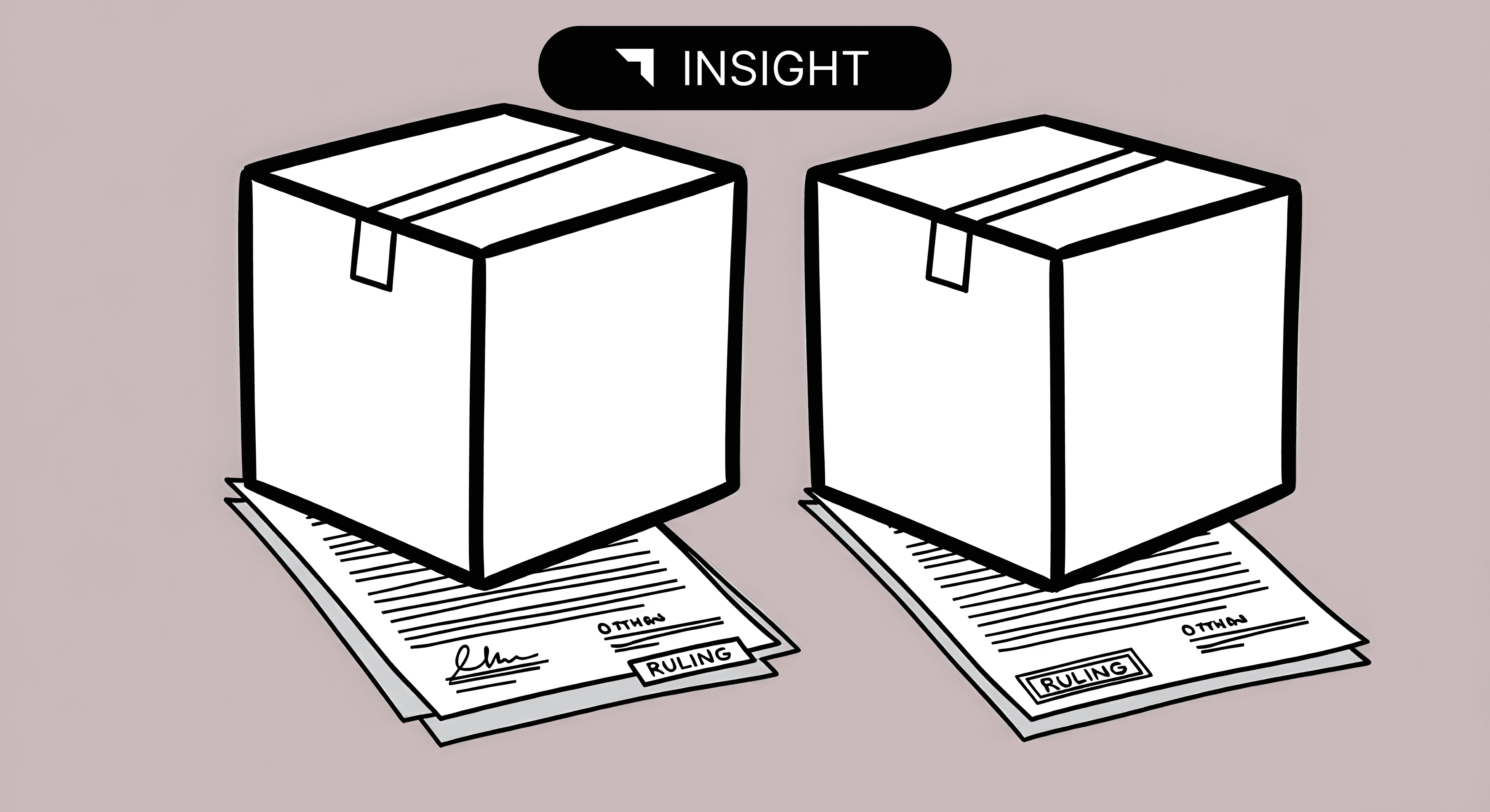
Why Two Identical Products Can Have Different HTS Classifications
At first glance, it might seem unreasonable that two products that look the same can receive different HTS classifications at customs. After all, if they are identical in appearance and marketed under the same name, shouldn’t they also be classified the same?
Not necessarily. Harmonized Tariff Schedule (HTS) classification is a legal interpretation, not just a numeric label for goods. Differences that may seem insignificant from a commercial or marketing perspective can lead to materially different classifications under customs law. Understanding why this happens can help importers reduce compliance risk and manage duties more effectively.
HTS Classification Is Based on Legal Criteria, Not Commercial Labels
The HTS is grounded in the Harmonized System (HS), an internationally standardized structure that classifies goods based on their essential characteristics, such as composition, function, and use, not their brand or commercial name. The United States’ HTS extends the six-digit HS into a ten-digit code for tariff, statistical, and regulatory purposes.
Two products with identical commercial descriptions can still differ in the legal factors customs uses to decide classification.
1. Differences in Composition or Materials Can Change Classification
Even tiny variations in the makeup of a product can change its HTS outcome. For example:
- A textile product made 90% cotton vs one made 95% cotton could fall under different headings because classification rules consider material composition.
- A plastic component might be classified differently if the polymer grade, reinforcements, or additives affect its essential character.
Customs classification hinges on objective characteristics, not commercial brand equivalence.
2. Function and Intended Use Matter
Classification rules consider how a product functions and what it is intended to do. Two products meant for slightly different uses—even if they look identical to a layperson—can fall under different HTS codes.
For example:
- A hand tool intended for professional industrial use vs the same tool packaged as a consumer retail item might invoke different legal notes or headings due to use context.
- Apparent “accessory” items might be classified in a different section if their function makes them essential to a primary machine.
HTS classification does not rely on visual similarity alone; the legal description must match the product’s actual function and context.

$100 in free credit! Zero risk.
Create your free account — no credit card required.
3. Assembly and Component Differences Affect Classification
Sometimes products that seem identical externally can differ in their internal structure. For HTS purposes, whether a product is:
- Fully assembled
- Unassembled or disassembled
- A kit of parts
can affect which General Rules of Interpretation (GRIs) apply. For example, GRI 2 addresses unassembled/disassembled goods, and GRI 3 addresses composite goods—both scenarios in which classification may differ even if the final marketed product looks the same.
4. Different Classification Rules May Apply Sequentially
The HTS classification process follows a set of ordered steps under the General Rules of Interpretation (GRIs). These rules apply in sequence, and at each step customs analysts must choose which rule fits best based on legal text, notes, and product facts.
For instance:
- GRI 1 looks at the basic legal descriptions
- GRI 2 considers incomplete articles
- GRI 3 deals with combined articles
This structured hierarchy means that two identical products might end up under different headings if one triggers a particular set of notes or rules before the other—even though their marketing description is the same.
5. National Extensions Can Drive Different Outcomes
The international HS system provides a global base up to six digits. Each country, including the United States, adds further digits to create a national HTS code. These additional digits often reflect policy decisions, tariff programs, and regulatory distinctions specific to that country.
That means two products classified identically under the six-digit HS globally might be differentiated at the ten-digit level in the US due to US-specific subheadings or duty programs.
For example:
- Two products in the same HS heading might fall under different US HTS subheadings that carry different duty rates due to trade remedy programs, anti-dumping measures, or preferential tariff treatments.
6. Documentation and Reasoning Affect Real-World Classification
HTS classification is not purely automatic. Customs officials apply legal reasoning based on the product description and supporting documentation submitted by the importer or broker.
Two importers with visually identical products might receive different classifications if:
- One provides more complete product specifications
- One documents the function better
- One includes evidence supporting a particular interpretation of the rules
Customs decisions are legal interpretations, and better documentation can yield a different conclusion, even for seemingly identical products.
In short, two products can receive different HTS classifications because classification is based on objective legal criteria, not commercial similarity. Even small differences in material composition, function, assembly state, or the way rules are applied can drive divergent outcomes.
For importers, this reality means that properly documenting and reasoning each classification decision is essential to compliance, defensibility, and optimal tariff treatment.
Related News
March 13, 2026
Cross Rulings Explained: What They Are, How to Find Them, and When They Apply
Read more →
March 19, 2026
GRI 3(b) Set Classification: How It Works, When It Applies, and Common Mistakes
Read more →
February 26, 2026